


Prostatitis is inflammation of the prostate gland.Currently, urologists tend to believe that prostatitis is not a single disease, but combines several diseases of the male reproductive system.It is one of the most common pathologies of the male urogenital tract, and according to experts, the percentage of men who suffer from prostatitis in some form is constantly increasing.The risk of developing prostatitis increases with age.
Causes of prostatitis
The direct cause of prostatitis is two factors of equal importance.The first is the occurrence of congestion in the pelvis and consequently the prostate, and the second is the addition of infection.In some cases, however, the infectious agent cannot be detected in the prostate tissue;presumably, in this case, the cause of prostatitis is autoimmune processes, which means that the prostate gland is attacked by the cells of its own immune system as a result of a malfunction in it.
Predisposing factors for inflammation of the prostate: weakened immunity due to infection, hypothermia, stress;hormonal disorders, incomplete ejaculation, physical inactivity, food preferences (addiction to fried, fatty, smoked, spicy foods), frequent urinary retention.Irregular sex life is considered one of the common causes of prostatitis.
Types of prostatitis
Currently, the international classification of prostatitis is accepted, which is the most complete and covers all types of inflammation:
- Category I.Acute prostatitis;
- II.category.Chronic bacterial prostatitis;
- III.category.Non-bacterial chronic prostatitis/chronic pelvic pain syndrome - a disease in which the infection is not detected and lasts for more than 3 months;
- III.subcategory A. Chronic inflammatory pelvic pain syndrome (leukocytes can be detected in the secretion of the prostate);
- Subcategory III B.Chronic, non-inflammatory pelvic pain syndrome (no leukocytes in prostatic secretion);
- ARC.category.Asymptomatic chronic prostatitis (leukocytes are present in the prostate secretion, the patient has no complaints, the disease is detected accidentally).
Symptoms of prostatitis
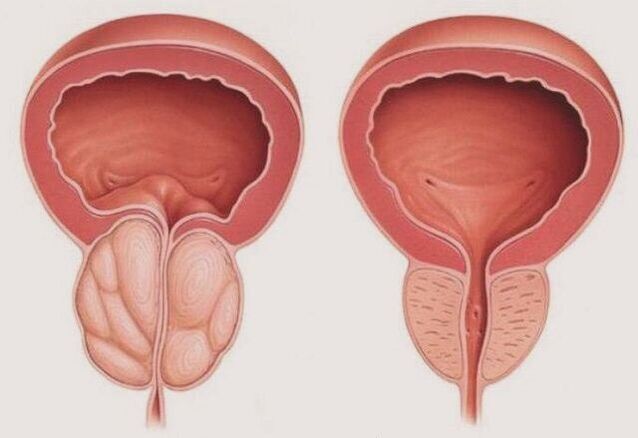
There is the so-called "prostatitis triad", the three most common symptoms of prostatitis.These are:
- pain in the pelvis and genitals;
- urination disorders, which include slow flow, intermittent urination, incomplete emptying of the bladder, frequent urination, etc.;
- disorders in the genital area.
It should be noted that not all three symptoms of prostatitis are mandatory;moreover, acute and chronic prostatitis occur differently.
Symptoms of acute prostatitis: severe, sharp pain in the prostate gland, which radiates to the rectum, perineum, testicles, lower back;worsening of the general condition, fever, headache and muscle pain, general weakness;urination disorders up to acute urinary retention due to swelling of the prostate and compression of the urethra.
Symptoms of chronic prostatitis: pain in the prostate gland, but less intense than in acute prostatitis;urinary disorders, sexual disorders: incomplete erection, short-term erection, accelerated ejaculation, etc.Chronic prostatitis can also have a wave-like course, when periods of exacerbation are followed by periods of subsidence, or it can be accompanied by continuous mild symptoms.
Unlike other inflammatory diseases, when the chronic process is the result of untreated acute inflammation, chronic prostatitis is often primary chronic, when the patient himself has difficulty determining the onset of the disease.
Diagnosis of prostatitis
The following tests are performed to diagnose prostatitis:
- analysis of prostate secretion;
- digital rectal examination;
- transrectal ultrasound of the prostate;
- Ultrasound of the kidneys and bladder;
- blood test for PSA (prostate antigen);
- general blood test;
- general urinalysis;
- urine test for urogenital infections before and after prostate massage;
- uroflowmetry (urine test).
The main thing during the diagnosis is to identify the cause of prostatitis, since the therapeutic measures depend on it.Another diagnostic task is the exclusion of prostate cancer.
Treatment of prostatitis
Acute and chronic prostatitis of bacterial origin is treated with antibacterial drugs.Strong doses of antibiotics are prescribed for acute prostatitis, even before culture results are obtained, because the acute process requires immediate intervention.In combination, anti-inflammatory, non-steroidal drugs are prescribed, which also have an analgesic effect.
Chronic prostatitis is treated depending on the cause.In case of non-bacterial prostatitis, restorative and immunomodulating drugs are taken.The treatment of prostatitis is carried out with the obligatory participation of physiotherapy procedures: laser therapy, magnetic therapy, electrophoresis of medical substances, ultrasound, etc.
Urologists claim that the treatment of prostatitis with medical means only gives temporary relief, because without changing the usual lifestyle, the treatment of prostatitis is ineffective.You need to give up bad habits, lead an active lifestyle, eliminate physical inactivity, avoid pool congestion with the help of special exercises, try to spend less time in the car, move more on foot and get enough rest.
It is also important to improve your sex life, make it regular and eat well.Chronic prostatitis tends to relapse, so lifestyle changes must be permanent, only in this case the treatment of prostatitis leads to a complete recovery.
Treatment of prostatitis with folk remedies
Traditional methods are widely and successfully used to treat prostatitis, especially chronic prostatitis.They have a milder effect than drugs, but are still quite effective and have fewer side effects, so the treatment of prostatitis with folk remedies can be carried out for a long time, until the symptoms of the disease disappear.
Among the folk remedies for the treatment of prostatitis, teas made from herbs with anti-inflammatory and antibacterial effects are widely used: chamomile tea, sage leaves, calendula, etc.Herbs are also used in the form of tinctures and balms.Honey and bee products are used as general tonics.Beeswax is excellent for wrapping for the treatment of chronic prostatitis, replacing paraffin.Echinacea tincture is used as a mild immune stimulant, and certain types of honey have been used successfully for the same purpose.